
Lofoten road trip guide
Everything you need to know about driving from Evenes or Narvik to the stunning Lofoten Islands.
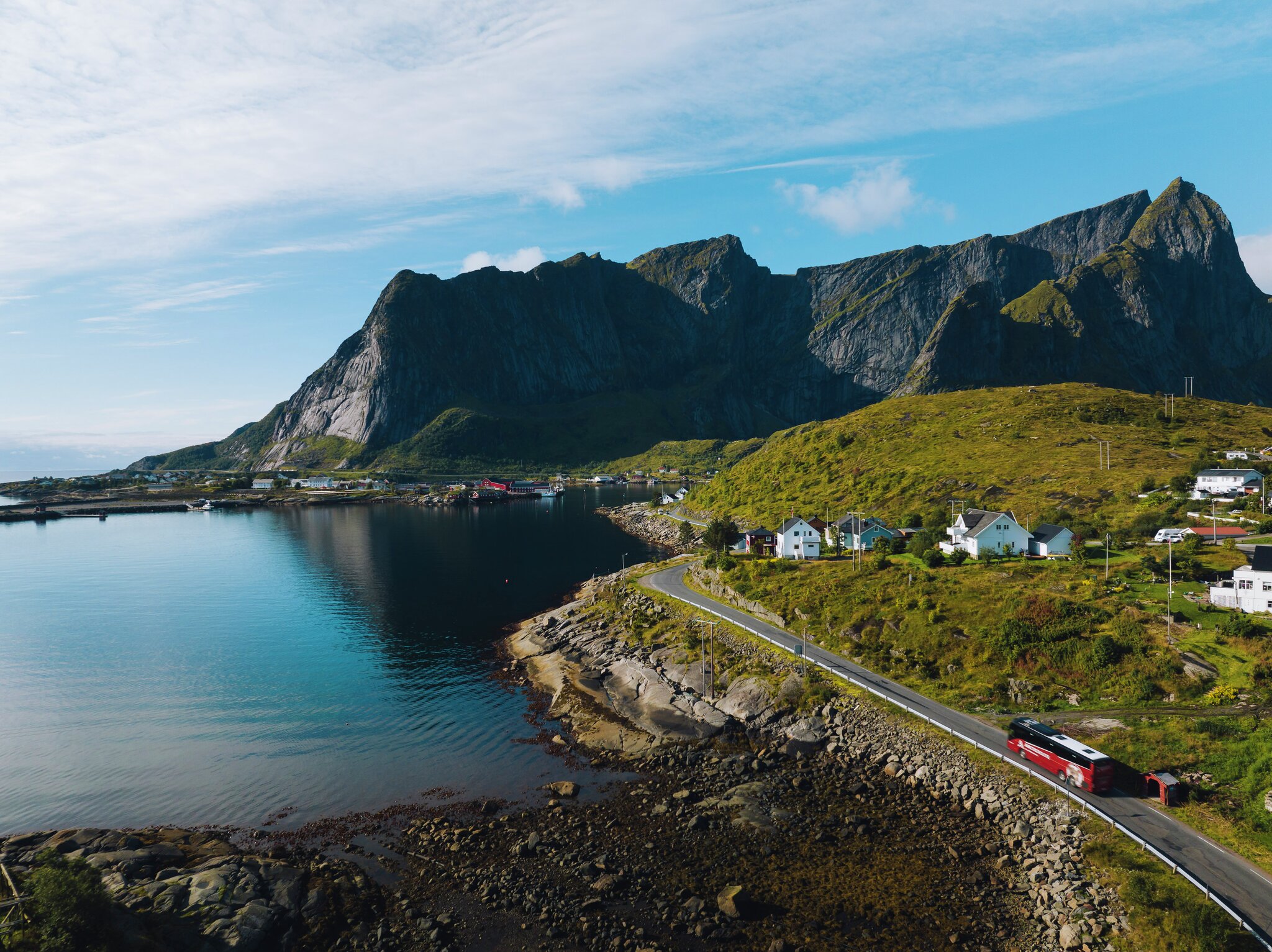 Photo: Visit Lofoten
The Lofoten Islands are one of those places that look almost too good to be real. Jagged peaks rise straight out of the sea, traditional red fishing huts dot the shoreline, and the light, especially during the polar night or midnight sun, creates scenes that photographers dream about. Getting there by car is half the adventure.
Most visitors fly into Harstad/Narvik Evenes Airport, which has recently been rebranded to include "Lofoten" in its name, a marketing move that makes sense given how many travelers pass through on their way to the islands. From Evenes, it's about 2.5 hours to Svolvær, the largest town in Lofoten. Drive all the way to Å at the southern tip, and you're looking at roughly five hours, though that assumes you don't stop for photos, which is unrealistic.
The route from Evenes to Lofoten
The E10 is your road. It runs from Sweden through Norway and includes 129 kilometers through the Lofoten Islands, connecting Svolvær to Å. The Lofast connection, the road link from the mainland, was completed in 2007 and replaced the ferry that used to be the only option.
From Evenes Airport, you'll head west and cross the Tjeldsund Bridge, a suspension bridge spanning just over 1,000 meters. It connects the mainland to Hinnøya, Norway's largest island. The views across the Tjeldsundet strait are your first taste of what's to come.
The Lofast route includes several tunnels, the longest being the Sørdal Tunnel at 6.3 kilometers, and the Raftsund Bridge. Expect to pass through roughly six tunnels before reaching Svolvær. The road is designated as a National Tourist Route, which means you'll find well-designed rest areas and viewpoints along the way.
Best stops along the way
Svolvær
The administrative center of Lofoten and your first major stop. Locals recommend the hike up Tjeldbergtinden (almost 400 meters) for unobstructed views over the town and the surrounding islands. It's considered a Sunday morning stroll by residents, so don't expect a full-day expedition. Svolvær has restaurants, supermarkets, and most services you'll need.
Henningsvær
About 30 minutes from Svolvær, this fishing village of 500 people became famous for something unexpected - a football pitch squeezed between the mountains and the sea. The "Henningsvær Stadium" has been called one of the most beautifully situated sports fields in the world. Beyond the Instagram-famous pitch, the village has galleries, craft shops, and cafés worth exploring.
Lofotr Viking Museum
Located in Borg, this museum features a reconstructed Viking longhouse, the largest ever found. You can try axe throwing, watch demonstrations, and even sail on a replica Viking ship during summer. Worth a couple of hours if you have any interest in history.
Reine
This is the postcard shot. Reine sits at the mouth of Kirkefjorden, backed by dramatic peaks that seem to burst straight out of the water. The iconic red rorbuer (fishermen's cabins) are clustered along the shore, and the whole scene is routinely described as one of the most beautiful in Norway. Reinebringen, the famous viewpoint above the village, requires a steep hike. Check conditions before attempting it.
Å
The road ends here, literally. Å (pronounced "aw") is a preserved fishing village and the end of the E10. Before you turn around, stop at Bakeriet På Å, a bakery that has been making cinnamon buns using the same recipes and oven (built in 1878) for generations. The kanelbolle with a view of the mountains is a proper way to mark the end of the road.
Practical information
Distances and times
Evenes Airport → Svolvær: ~170 km, 2.5 hours
Svolvær → Reine: ~75 km, 1.5 hours
Svolvær → Å: ~125 km, 2.5 hours
Evenes Airport → Å: ~300 km, 5 hours (without stops)
Road conditions
Speed limit: 80 km/h on E10, slower in villages and narrow sections
Road width: 6-7.5 meters on most of E10, narrowing to 5 meters near Å
One-lane bridges around Reine-Hamnøy (traffic lights control flow)
Gimsøystraumen and Raftsund bridges may close in strong winds (>25 m/s)
Winter driving
Winter tires are mandatory. The E10 is prioritized for snow plowing, and gravel is used instead of salt for traction. You don't need a 4x4. Most locals drive regular cars year-round. However, conditions can require driving at 30 km/h even on roads marked for 80 km/h. Allow extra time and check weather forecasts before departing.
Getting your rental car
Having a car is essential for exploring Lofoten. Public transport is limited and doesn't reach the most interesting spots. Pick up your rental at Evenes Airport and you're ready to go. All our vehicles come equipped with winter tires during the cold months, and we can arrange delivery directly at the airport terminal.
Related guides
Sources
Written and edited by
Almaz Ermilov, Aleksei Poroshin and Vitalijus Zubrickas
Published January 1, 2026