Northern lights in Narvik
When and where to see the aurora borealis near Narvik, plus photography tips.
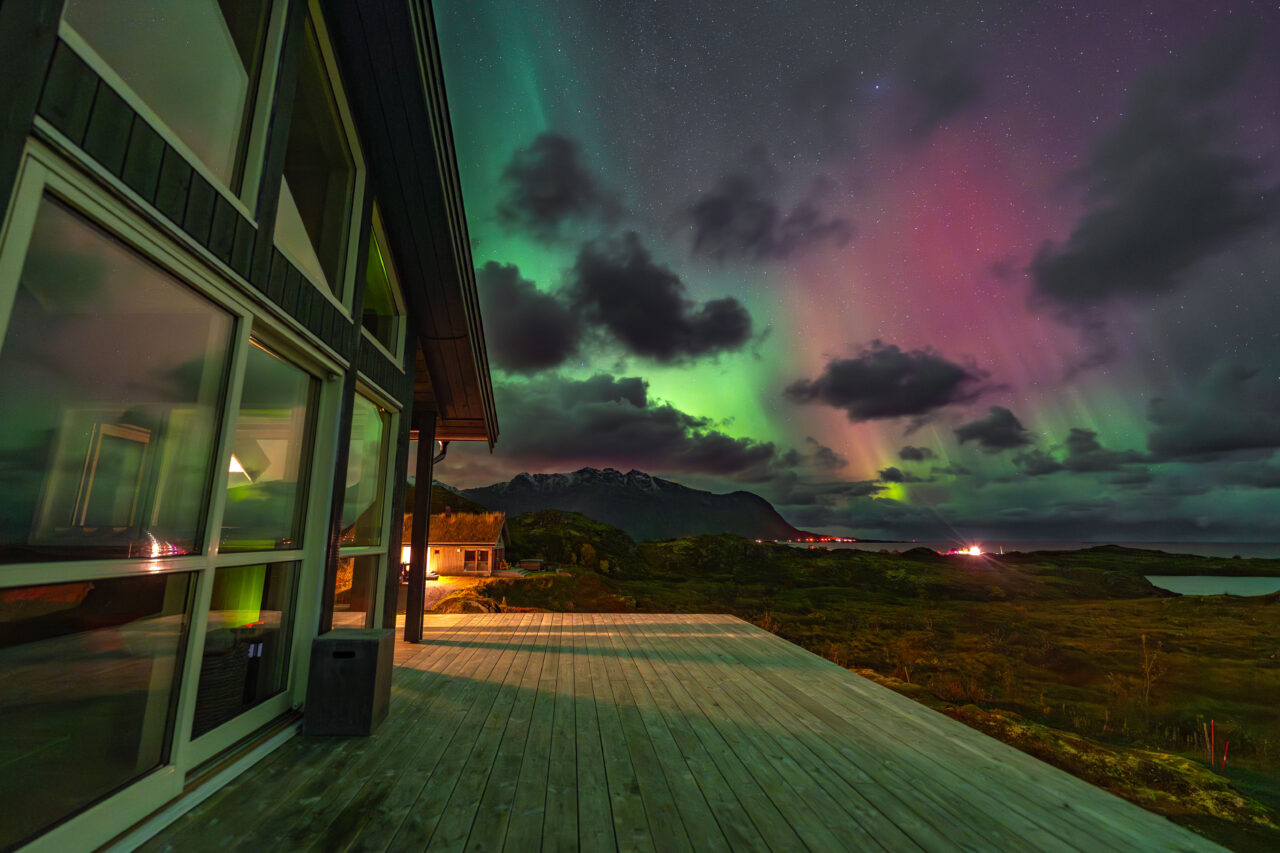 Photo: Lofoten Links
Narvik sits at 68 degrees north, well within the Aurora Oval, the belt around the magnetic north pole where northern lights appear most frequently. This geographic position makes it one of the most reliable places in the world to see the aurora borealis. Add minimal light pollution and diverse terrain, and you have conditions that photographers and first-time viewers dream about.
The region's varied microclimates are a hidden advantage. Valleys, fjords, and mountains each have their own weather patterns, which means that even on cloudy nights, a short drive can take you to clear skies. This flexibility, combined with having your own car, dramatically improves your chances of seeing the lights.
When to see the northern lights
The aurora season in Northern Norway runs from September through April. You need darkness to see the lights, so the polar night period (when the sun doesn't rise above the horizon) offers the longest viewing windows. In Narvik, this occurs roughly from late November to mid-January.
Best months
December - February Long dark nights and often clear skies. The coldest period, but highest viewing probability.
September - October Statistically high aurora activity. More comfortable temperatures and some daylight for other activities.
March - April Also high activity periods. Longer days allow skiing and outdoor activities before evening aurora viewing.
Peak viewing hours are typically between 10 PM and 2 AM local time. The aurora can begin as a faint green glow on the horizon and then suddenly intensify across the entire sky. Patience pays off.
Where to watch
The key is getting away from artificial light. Find an open area (a hilltop, lakeside, or fjord shore works well) at least 150 meters from buildings and street lights. Look north, but keep watching the whole sky; the aurora can appear in any direction when it intensifies.
Having a car gives you the ability to chase clear skies. Cloud cover can vary dramatically over short distances in the mountains. If it's overcast in Narvik, a 30-minute drive inland or along the fjord might find you under a clear sky.
The Northern Lights Train
Narvik offers something unique, the Northern Lights Train. This is Norway's northernmost railway, running from Narvik into the mountains toward Sweden. Special evening departures take passengers into dark areas away from city lights, with guides sharing local stories along the way. When activity is good, the train stops so passengers can step outside and watch the lights dance over the fjords and peaks.
Photography tips
You don't need professional equipment to capture the aurora, but manual camera settings and a tripod make a significant difference. Smartphones have improved dramatically, and many recent models have dedicated night modes that work reasonably well.
Camera settings
Shutter speed 4-25 seconds depending on aurora intensity
Aperture As wide as possible (f/2.8 or lower)
ISO 1600-3200, adjust based on results
Focus Manual focus set to infinity, or focus on a distant light
Tripod Essential for long exposures
Composition matters. Including a foreground element like mountains, a traditional fisherman's cabin (rorbu), or reflections in water creates more interesting images than just the lights against black sky. Scout locations during daylight so you know where to set up at night.
Practical tips
Dress in layers. You'll be standing still in cold temperatures for extended periods. Thermal underwear, wool layers, and a windproof outer shell are essential. Bring hand warmers.
Use aurora forecast apps. Apps like Aurora Forecast or websites like SpaceWeather Live provide real-time data on geomagnetic activity. Set push notifications for high activity.
Stay at least three nights. Weather and aurora activity are unpredictable. Multiple nights give you better odds of catching a clear sky with active lights.
Consider moon phases. A full moon provides beautiful landscape illumination but can wash out fainter aurora displays. New moon periods offer the darkest skies.
Chase the lights with your own car
The flexibility to drive to clear skies dramatically increases your chances of a successful sighting. Check weather forecasts and aurora apps, and be ready to move if conditions look better elsewhere. All our winter rental cars come with winter tires and are ready for nighttime driving in Arctic conditions.
Related guides
Sources
Written and edited by
Almaz Ermilov, Aleksei Poroshin and Vitalijus Zubrickas
Published January 1, 2026