Narvik, Europe's emerging AI hub
How Narvik became Europe's unlikely home for major AI infrastructure projects.
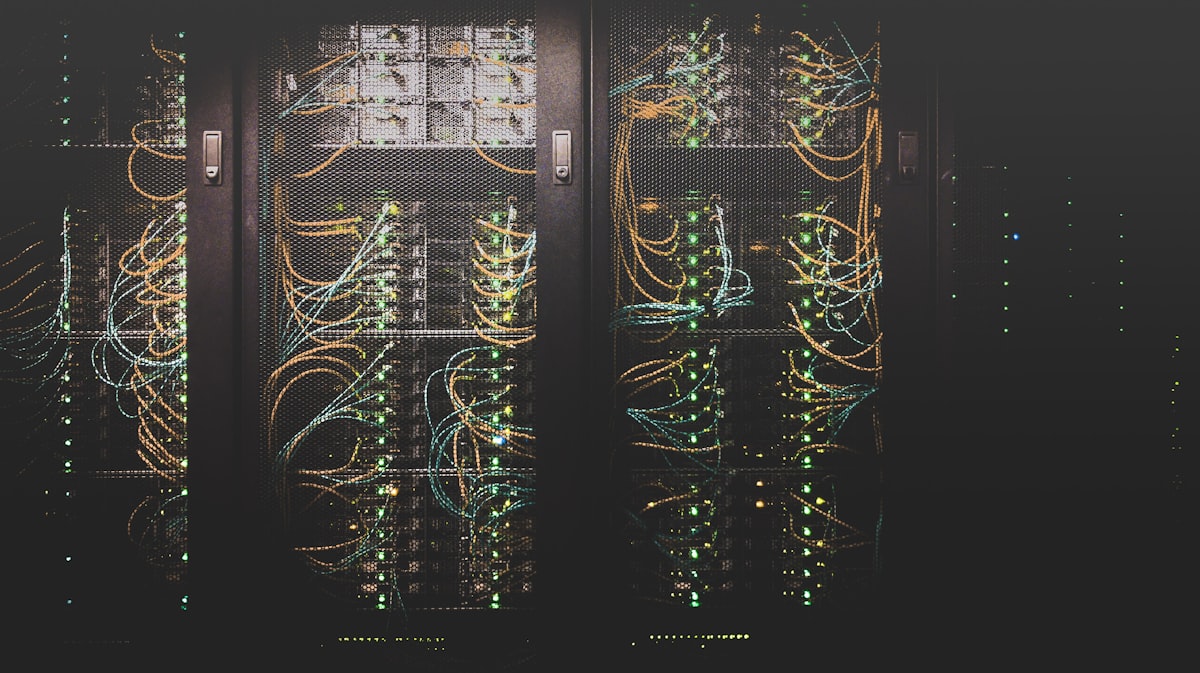 Photo: Unsplash
Narvik, the small Arctic port town known for skiing and northern lights, has quietly become one of the most significant locations for AI infrastructure in Europe. Two major projects, one from OpenAI and one involving Microsoft, are transforming the region into a computing powerhouse. It's a development that few would have predicted a decade ago.
The story begins with geography. Narvik sits above the Arctic Circle, where hydropower is abundant and cheap, the climate is naturally cool (ideal for data center cooling), and local electricity demand is low. These conditions make it perfect for power-hungry AI computing facilities.
Stargate Norway: OpenAI's first European data center
On July 31, 2025, OpenAI announced Stargate Norway, its first AI data center in Europe. The facility is being built in Kvandal, just outside Narvik, through a partnership with British AI cloud provider Nscale and Norwegian energy firm Aker.
Stargate Norway specifications
GPUs 100,000 NVIDIA GPUs by end of 2026
Initial capacity 230MW, expandable to 520MW
Investment ~$1 billion initial capital
Partnership 50/50 joint venture between Nscale and Aker
Power 100% renewable hydropower
OpenAI will be an "off-taker" in the project, meaning they'll buy computing capacity from the facility rather than own it directly. Surplus capacity will be available to other customers in the UK, Nordics, and Northern Europe.
The facility will use closed-loop, direct-to-chip liquid cooling for maximum efficiency. Excess heat from the GPUs will be made available to support local low-carbon enterprises, a practical example of industrial symbiosis.
Microsoft and partners: $6.2 billion AI infrastructure
Separately, Microsoft has partnered with Nscale and Aker to build sustainable AI infrastructure in the Narvik region worth an estimated $6.2 billion. The project will deliver advanced AI capabilities powered entirely by renewable energy.
According to project leaders, this will be "one of the largest GPU deployments in the world." Service delivery is scheduled to begin in 2026, with a five-year phased rollout planned.
Why Narvik?
The choice of Narvik makes sense when you look at the numbers.
Cheap, clean power Northern Norway has Europe's cheapest electricity, generated from hydropower, 100% renewable. Power prices are well below the European average.
Natural cooling The Arctic climate reduces the energy needed to cool servers. Data centers elsewhere spend significant energy on air conditioning.
Low local demand With a small population, there's surplus transmission capacity available for industrial-scale computing.
Established infrastructure Narvik has been an industrial port for over a century, with existing power grid connections and logistics capabilities.
From Kolos to AI: a brief history
This isn't Narvik's first brush with data center ambitions. In 2017, a Norwegian-American company called Kolos announced plans to build "the world's largest data center" in nearby Ballangen. The proposed facility was to span 600,000 square meters and process up to 1,000MW.
The Kolos project ultimately didn't materialize as planned. Hive Blockchain bought the location in 2018 for cryptocurrency mining, and the grandiose vision faded. But the current projects, backed by established tech giants and substantial capital, represent a more realistic path forward.
Local impact
For a town of 22,000 people, these projects represent a significant economic opportunity. The original Kolos proposal estimated 2,000-3,000 jobs at full build-out. While exact employment numbers for the current projects haven't been confirmed, the scale suggests substantial job creation in construction, operations, and support services.
Beyond jobs, the projects position Narvik as a tech destination, a curious contrast to its traditional image as a ski and northern lights destination. Tech tourism may become a real phenomenon, with professionals visiting to see the facilities that power AI systems worldwide.
Getting around
Whether you're visiting Narvik for business related to the tech projects, combining a conference with tourism, or simply curious about the region that's powering AI, having a car gives you flexibility to explore both the data center sites and the surrounding fjords and mountains.
Related guides
Sources
Written and edited by
Almaz Ermilov, Aleksei Poroshin and Vitalijus Zubrickas
Published January 1, 2026