
WWII history tour in Narvik
Hitler's first defeat happened here. Explore Narvik's dramatic role in World War II.
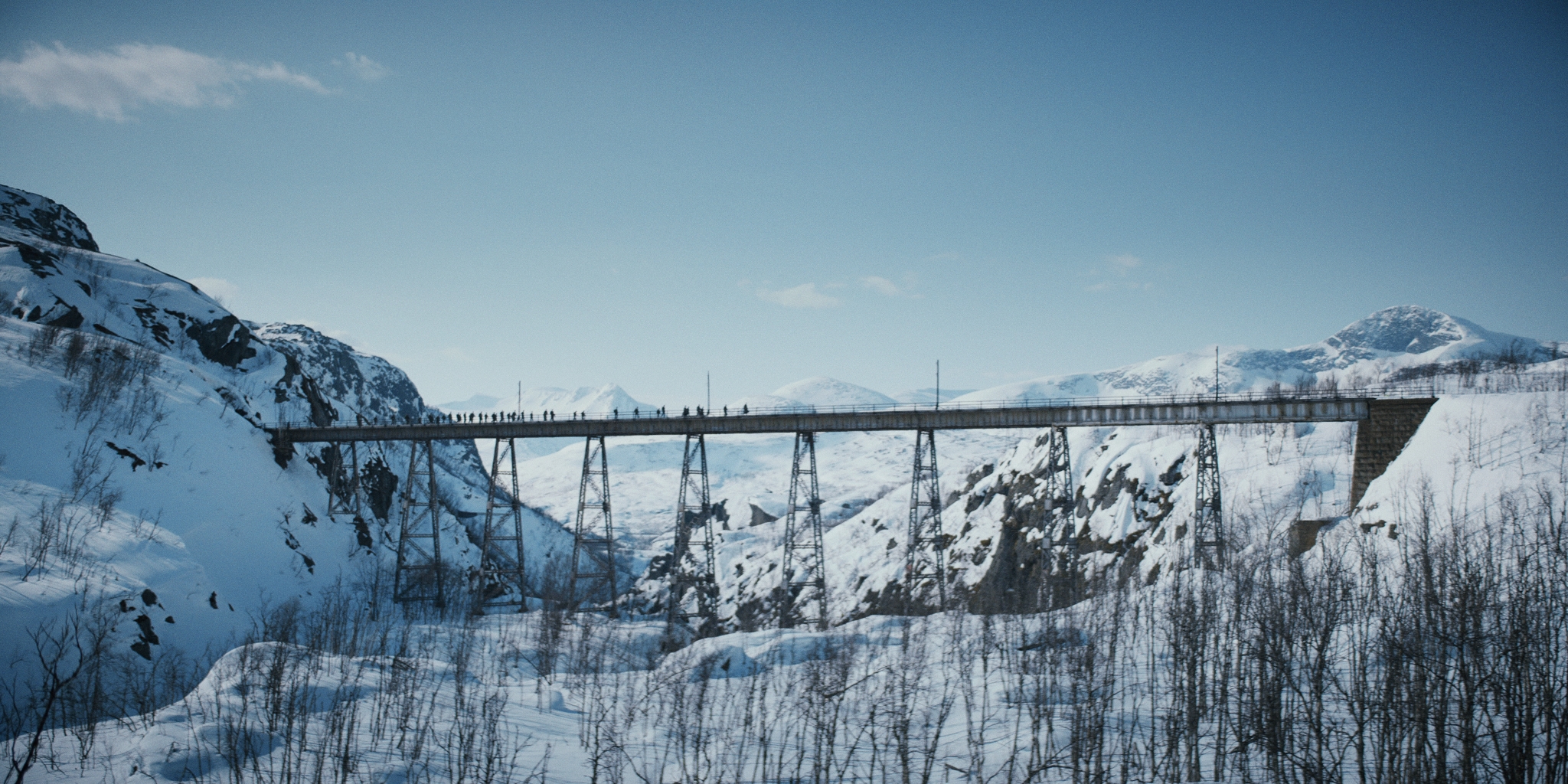 Photo: Nordisk Film / Visit Narvik
In April 1940, the eyes of warring Europe turned to a small Norwegian town most people had never heard of. Narvik's ice-free harbor was the endpoint of a railway carrying Swedish iron ore, the raw material that kept Germany's war machine running. Control Narvik, and you controlled access to 85% of the iron ore feeding Nazi weapons production.
What followed was one of the most dramatic episodes of the early war: 62 days of naval battles in the fjords, mountain warfare in Arctic conditions, and the first Allied victory over Nazi Germany. The Battles of Narvik cost 8,500 lives and gave Hitler his first taste of defeat.
Why Narvik mattered
The iron ore mines at Kiruna in northern Sweden were among the largest in the world. In winter, when the Baltic Sea froze, the only route out was the railway to Narvik, Norway's northernmost ice-free port. German intelligence deemed this route so critical that the Abwehr established a dedicated "ore section" in Stockholm to monitor it.
Both Britain and Germany understood: whoever controlled Narvik controlled the iron supply. The British planned to mine Norwegian waters. The Germans planned faster.
The battle begins
On April 9, 1940, ten German destroyers entered the Ofotfjord carrying 2,000 mountain troops. Norway's two obsolete coastal defense ships were quickly sunk, and by morning German forces controlled Narvik. It looked like a clean victory.
The next day, the Royal Navy struck back. The Second Destroyer Flotilla under Commodore Bernard Warburton-Lee sailed up the fjord in the early morning darkness. The attack was daring but costly. Warburton-Lee was killed in action, receiving Britain's first Victoria Cross of the war. Both sides lost ships.
On April 13, the British returned with overwhelming force: the battleship HMS Warspite and nine destroyers. By the end of that day, the entire German destroyer flotilla, out of ammunition and fuel, had been destroyed or scuttled in the fjords around Narvik. It was a decisive Allied naval victory.
Mountain warfare in the Arctic
While the naval battles raged in the fjords, a land campaign developed in the mountains around Narvik. Norwegian soldiers, many initially on neutrality guard, took up positions in the surrounding terrain. Allied reinforcements arrived: British, French, and Polish troops, eventually numbering 24,500 men.
Allied forces at Narvik
Norwegian Army units mobilized locally
British Army and Royal Marines
French Alpine troops (Chasseurs Alpins)
Polish Independent Highland Brigade (5,000 soldiers)
French Foreign Legion units
For weeks, fighting continued in conditions the Germans hadn't anticipated: deep snow, freezing temperatures, and terrain that favored defenders. Slowly, the Germans were pushed into an ever-smaller area. On May 28, 1940, Norwegian and Allied forces recaptured Narvik. It was the first time German forces had been driven back. Hitler had suffered his first defeat.
Victory and withdrawal
The victory was short-lived. By late May 1940, Germany had invaded France and the Low Countries. The situation on the continent was critical, and the Allied command decided to evacuate forces from Norway to reinforce the Western Front. Without Allied support, continuing the campaign was impossible.
King Haakon VII faced an impossible choice. On June 7, he left Norway aboard HMS Devonshire, establishing a government-in-exile in London. As Allied forces withdrew, German bombers leveled Narvik, partly as revenge, partly to deny the Allies any usable infrastructure. The town was largely destroyed.
Historians have argued that the fierce resistance at Narvik convinced Hitler to postpone his planned invasion of Britain. The losses in Norway, particularly the destruction of the German destroyer force, weakened the Kriegsmarine at a critical moment.
Narvik War Museum
The modern Narvik War Museum (Narvik Krigsmuseum) opened in its current building in 2016, replacing an earlier museum that had operated since 1964. Located in the town center, it houses artifacts, interactive displays, and archives documenting the 62-day battle and the subsequent occupation.
Museum highlights
Interactive display of naval battles in the Ofotfjord
French Hotchkiss H35 tank from the 1940 campaign
Captured German mountain artillery
Personal items and testimonies from soldiers and civilians
Family walk in underground Nazi bunkers (guided tour)
The museum is open year-round, 10:00-16:00 (extended summer hours until 18:00). Exhibitions are in English and Norwegian, with translations available for French, German, Polish, and Sami via QR codes. The building also houses the town library, tourist information, and a café.
On screen: Narvik (2022)
The 2022 Norwegian film "Narvik: Hitler's First Defeat" dramatizes the battle through the eyes of a local family caught in the conflict. While some dramatic liberties were taken, the film captures the scale of the fighting and the impossible choices civilians faced. It's available on Netflix and worth watching before or after your visit.
Planning your visit
Visitor information
Museum hours - 10:00-16:00 (18:00 in summer)
Closed - December 24-25, January 1
Location - Central Narvik, near the main square
Time needed - 1.5-2.5 hours for the museum
Café - "Punktum" on the ground floor
Beyond the museum, traces of the battle remain in the landscape: memorial sites, bunkers, and the fjord where the naval battles took place. The Ofotbanen railway, the reason Narvik mattered, still runs to the Swedish border, and the views from the train help you understand the terrain where the fighting occurred.
Related guides
Sources
Written and edited by
Almaz Ermilov, Aleksei Poroshin and Vitalijus Zubrickas
Published January 1, 2026